
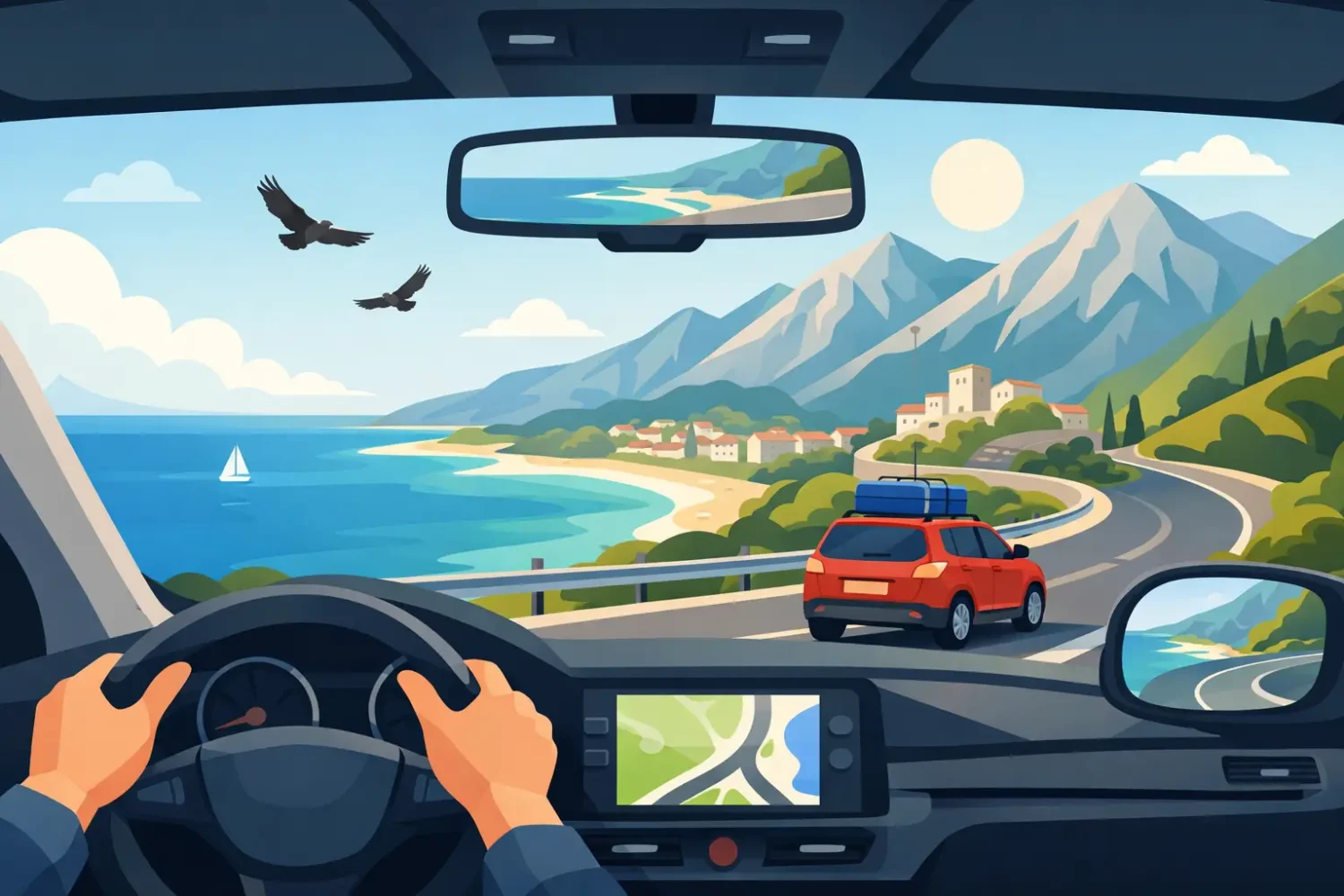
The first time you pull out of Tirana and point your vehicle toward the coast or the mountains, Albania makes its case fast. One hour can take you from busy city traffic to sweeping valleys, stone villages, and roads that feel made for an unplanned stop. That is the real appeal of driving in Albania as a tourist – you are not limited to hotel check-in times, bus schedules, or the usual shortlist of places everyone else sees.
That freedom is real, but so is the need for a little road sense. Albania is very drivable for visitors, especially if you like independent travel, but it is not a place where you should assume every road works the same way it does back home. Some stretches are smooth and easy, others are narrow, steep, or under repair. If you know what to expect before you start, the experience feels far less stressful and a lot more rewarding.
Is driving in Albania as a tourist difficult?
Usually, no. It is better described as variable than difficult. Main roads connecting major cities and popular coastal areas have improved a lot, and many routes are straightforward in good weather. If you are comfortable driving in unfamiliar places, you will likely adapt quickly.
The challenge is that road conditions can change from one region to the next. In and around Tirana, traffic can feel busy and a bit aggressive, especially at roundabouts and intersections. In mountain areas, roads may become narrower, with sharper turns, slower local traffic, and the occasional unexpected obstacle like livestock or a vehicle parked in an awkward spot.
That does not mean you need to avoid driving. It just means Albania rewards a calm driver more than a rushed one. If you give yourself extra time and avoid treating every route estimate like a promise, the trip becomes much easier.
What documents do tourists need to drive?
Most visitors will need a valid driver’s license, passport, and rental documents if they are using a rented vehicle. Whether you also need an International Driving Permit depends on your home country and the type of license you hold. Many travelers can drive legally with their domestic license, but it is smart to confirm this before arrival rather than sorting it out at a rental desk.
You should also make sure the vehicle carries its registration and insurance paperwork. If you are renting from a professional provider, this is usually handled for you. It is still worth knowing where those documents are kept in the vehicle before you leave.
If you plan to cross into neighboring countries during your road trip, check that in advance too. Cross-border driving rules, insurance coverage, and permissions are not something to assume.
What roads are actually like
The biggest mistake travelers make is imagining Albania as either completely chaotic or completely easy. The truth sits in the middle. Many of the main routes are simple enough, especially between Tirana, Durres, Vlore, Berat, Shkoder, and other well-traveled areas. You can cover a lot of ground comfortably in one day.
Secondary roads are where the experience changes. Some are scenic and perfectly manageable. Others may have rough patches, faded markings, tight bends, or slower progress than a map app suggests. In remote areas, road surfaces can shift quickly, and signage may be limited.
This matters even more if you are traveling by campervan or motorhome. A road that is technically passable in a small car may not feel fun in a larger vehicle if it is steep, narrow, or lined with loose shoulders. For that reason, route choice matters as much as driving skill. A local rental team can save you time by helping you avoid roads that look short on a map but are poor choices in practice.
City driving, coastal roads, and mountain routes
Driving in Tirana
Tirana is usually the busiest part of the trip. Traffic density is higher, lane discipline can feel flexible, and parking takes patience. If you are picking up a rental vehicle in the capital, it helps to leave the city outside peak hours when possible. Once you are out, the drive often becomes much more relaxed.
Driving along the coast
The Albanian Riviera is one of the best reasons to self-drive. You can stop for beaches, viewpoints, seafood lunches, and overnight stays without building your day around transfers. In summer, though, popular coastal towns get crowded, and parking can be limited. Roads are still worth it, but start earlier than you think you need to.
Driving in the mountains
Mountain regions are beautiful and absolutely worth the effort, but they require more attention. Distances can look short while taking much longer than expected. Hairpin turns, changing weather, and occasional road damage all slow things down. If you are not confident driving narrow mountain roads after dark, do not force it. Plan to arrive before evening.
Local driving habits to expect
Albanian drivers are often confident, quick to overtake, and comfortable making decisions that may surprise visitors. That can sound intimidating, but it becomes easier once you stop expecting everyone to drive exactly by the book. The key is to stay predictable.
Do not compete with aggressive driving. Keep your speed sensible, leave space, and make your intentions clear. If someone wants to pass, let them. If traffic feels fast around you, that is not a reason to rush.
You should also expect a few rural surprises. Tractors, stray dogs, goats, and pedestrians may appear in places where you would not normally expect them. This is one reason daylight driving is much easier for first-time visitors.
Parking and overnight stops
Parking in major towns can be the most annoying part of the day, especially in summer. Central areas may be tight, informal, or hard to read at first glance. In smaller towns and rural areas, parking is often much easier.
For camper travelers, overnight planning matters. Not every scenic pull-off is the right place to stay, and not every beachside area is practical in peak season. You want somewhere level, safe, and suitable for the size of your vehicle. This is where using a provider with local route knowledge really helps. Companies like Camper in Albania do more than hand over the keys – they can help travelers understand which stops fit the vehicle and the style of trip they want.
Fuel, navigation, and timing
Fuel stations are easy to find on major routes and around cities, but they are less frequent in remote mountain regions. If your tank is getting low and you are heading somewhere rural, fill up sooner rather than later. It is a small habit that prevents unnecessary stress.
Navigation apps work well for general routing, but they are not perfect judges of road quality. The shortest route is not always the smartest one, especially in a campervan. If a suggested road looks tiny, steep, or oddly direct through mountains, treat it with caution.
Timing is another big factor. In Albania, a route may be memorable for the scenery alone, so trying to cram too much into one day usually backfires. Build margin into the day for coffee stops, photo stops, slower roads, and the simple fact that some places deserve longer than you planned.
A few practical safety tips
Seat belts are required, and normal road safety rules apply, but common sense goes further than memorizing rules. Keep valuables out of sight, avoid leaving bags visible in parked vehicles, and stay aware when stopping in unfamiliar places. Albania is generally welcoming for visitors, but basic travel habits still matter.
It is also wise to check the weather before longer drives, particularly in the mountains or shoulder seasons. Rain can affect road surfaces and visibility more than travelers expect. If conditions look poor, a flexible itinerary is one of the best advantages of self-drive travel.
Finally, choose a vehicle that matches your route and confidence level. Bigger is not always better. If your dream trip includes mountain roads, village access, and frequent stops, comfort on the road matters more than squeezing in extra luggage.
Why self-driving Albania is worth it
The real reward is not just getting from point A to point B. It is being able to stop at a roadside bakery you did not plan for, take the long coastal view instead of the direct route, or spend the night closer to a mountain trail because the weather is perfect. Albania is a country that opens up when you are not locked into fixed transfers.
Driving in Albania as a tourist works best when you approach it with flexibility, a little patience, and respect for the road conditions in front of you rather than the route you imagined. Do that, and the driving becomes part of the trip, not just the way you get through it.
If you leave room for the unexpected, Albania usually fills it with something worth remembering.