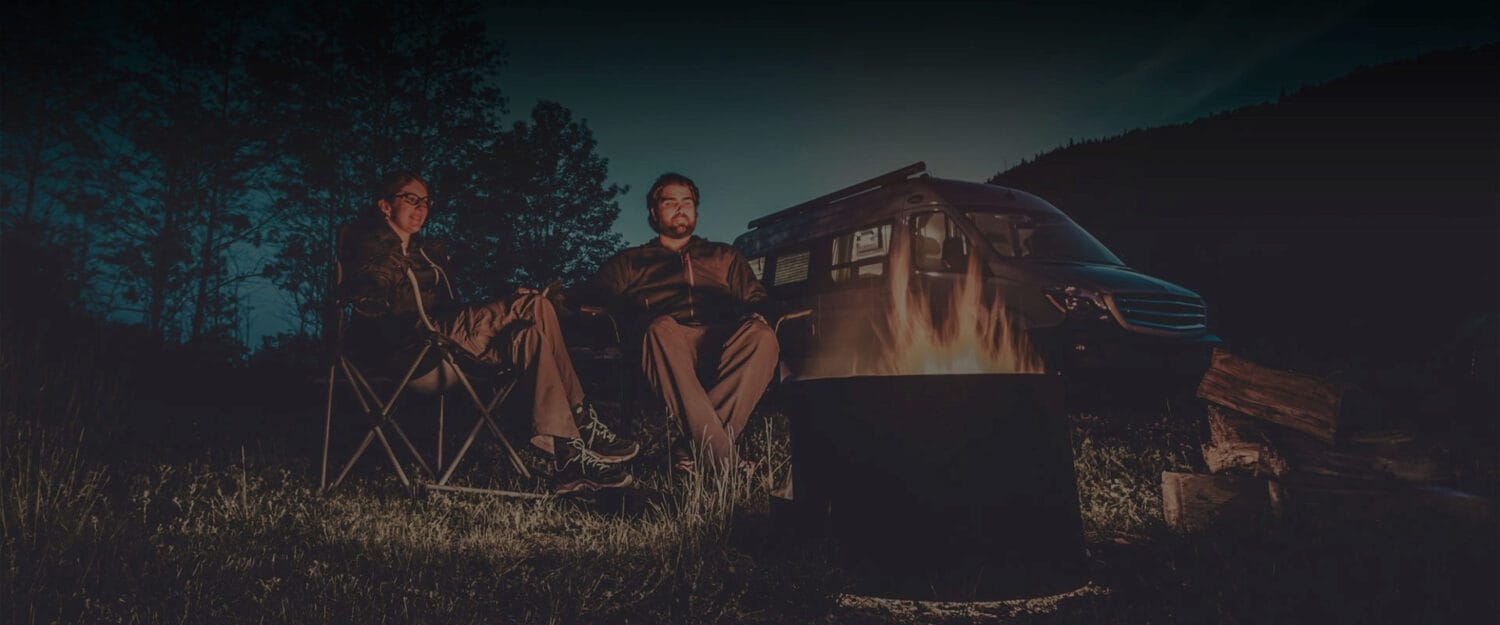
Wild camping in Albania sits in a friendly gray zone: officially permitted with a few restrictions, widely practiced, and in most of the country one of the easiest wild-camping experiences in Europe. You can sleep in your campervan on a Riviera cliff, beside a mountain river, or next to an olive grove without anyone bothering you.
A few things changed in 2026, though. New environmental rules tightened restrictions in certain national parks and on protected coastal dunes. This post gives you the current picture: what’s allowed, what’s not, where to park, how to behave, and 20 specific spots we send our own rental customers to.
We run a campervan rental company in Tirana. The spots below have been tested by our customers across multiple seasons.
The short answer
- Legal status: Wild camping is generally permitted on public land in Albania. There’s no national law that systematically prohibits it.
- New in 2026: Certain national parks and protected coastal dunes now have explicit bans. Signposting has improved — follow posted rules.
- Widely tolerated: Riviera coastline, mountain pullouts, beach parking lots, public lakesides, forest clearings.
- Not allowed: Private land without permission, core zones of Butrint and Divjaka-Karavasta national parks, military areas, fenced or cultivated land, and any spot with a “no camping” sign.
- Golden rule: Ask if you’re unsure. Albanians will almost always say yes, and often offer coffee.
Is wild camping legal in Albania?
The legal framework in 2026
Albania has no single law that either explicitly legalizes or criminalizes wild camping as an activity. In practice, it’s allowed on public land with a few specific exceptions:
- Camping on private land requires the owner’s permission — same rule as anywhere in Europe.
- National parks have their own rules, which vary park by park and have tightened in 2026.
- Military and border zones are off-limits. These are usually well-signposted.
- Protected coastal dunes — added to the restricted list in 2026 as part of an environmental protection package.
Enforcement is inconsistent. In tourist hotspots like Ksamil and core park zones, rangers and police are more active. In rural areas and along most of the Riviera, you’ll rarely be bothered. Fines exist for breaking posted rules in protected areas but are not common.
What actually happens on the ground
Honest description of enforcement reality:
- Most campers go a whole season without being asked to move.
- When police or rangers do approach, they’re almost always polite. “Can you please move” is the typical interaction, not a fine.
- Locals are the opposite of a problem. Farmers, shepherds, and café owners routinely welcome travelers and sometimes invite them in for food.
- The main risk isn’t authorities — it’s choosing a spot that’s actually private or inside a new protected zone without realizing it.
Wild camping vs. stealth camping
Worth distinguishing:
- Wild camping: Parking openly in a scenic spot where it’s tolerated — cliff-top pullouts, beach access points, mountain clearings. This post is about wild camping.
- Stealth camping: Parking inconspicuously in urban lots, supermarket parking, industrial streets. Tolerated in Albania but misses the point of why you came.
Where wild camping is welcome
The Albanian Riviera (Ionian coast)
The stretch of SH8 from Orikum south to Ksamil is the most popular wild-camping corridor in the country. Beach pullouts, cliff-side viewpoints, and pine-shaded parking areas are used by campers all summer.
- Best stretches: Dhërmi to Himarë, Borsh, Lukovë.
- Most beach-bar owners will let you park overnight if you eat or drink there.
- Avoid Ksamil center — too crowded, enforcement stricter.
Northern Alps (Theth and Valbona valleys)
- Pullouts along the Shkodër–Theth road offer stunning overnight spots.
- The Valbona river valley has several tolerated informal camper spots.
- Follow posted rules — Theth National Park has specific protected zones.
- Guesthouse yards are a reliable fallback (€5–15 per night, often free with dinner).
For the full picture of driving and camping in the Alps, see our Theth and Valbona campervan guide.
Mountain interior (Berat, Gjirokastër, Përmet, Korçë)
- Less-traveled mountain passes have some of the safest, quietest wild-camping in Albania.
- Farmers routinely welcome travelers — ask before parking near a farmhouse.
- Agritourism farms (like Mrizi i Zanave near Lezhë) offer camper spots with farm-to-table meals.
Lake regions (Shkodër, Ohrid, Koman)
- Lake Shkodra has several beach-access points that welcome campers.
- The Koman ferry terminal area has overnight parking for vehicles waiting for the morning ferry.
- Lake Ohrid (Pogradec side): beach access is more restricted, but gravel areas near Tushemisht work.
Where NOT to wild camp
Strictly prohibited in 2026
- Butrint National Park core zone. Archaeological protection, rangers present, fines enforced.
- Divjaka-Karavasta National Park inner zones. Flamingo and wetland protection.
- Protected coastal dunes (new 2026 restrictions). Look for posted signs — the zones vary along the coast.
- Core zones of Theth National Park. Follow signposts.
- Military areas and border zones. Well-signposted, take the signs seriously.
- Private beaches attached to hotels. Usually marked with chains or signs.
Legal but socially awkward
- Urban Tirana — possible but no reason to do it.
- Directly in Ksamil town center — crowded, enforcement-prone.
- Beach access points used by local families for swimming — don’t block, go one beach over.
- Gas station forecourts — fine for an hour or two, not for an overnight.
- Residential streets — legal but residents may complain.
Red flags to watch for
- Signs with a red circle around a tent or camper icon = prohibited.
- “Ndalohet kampimi” = “No camping” in Albanian.
- “Privat” = private property.
- Locked gates, boom barriers, chains across access = someone’s private land.
- Fresh tire tracks plus trash = someone else’s regular spot; move along.
20 tested wild camping spots
Every spot below has been used by our rental customers with positive reports. All GPS coordinates should be verified before you go — road access can change after storms or construction. Offline maps on Maps.me or Organic Maps are worth downloading before your trip.
Albanian Riviera (6 spots)
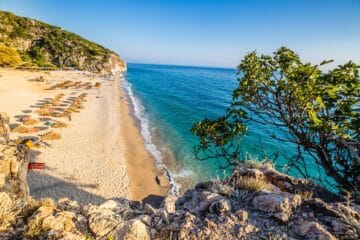
- Dhërmi north cliff pullout. Region: Riviera. Access: paved. Suitable for: all campers. Facilities: none, cafés 5 minutes away. Best months: May–October. Notes: Sunset views straight over the Ionian. Popular, so arrive before dark in high season.
- Gjipe Canyon parking area. Region: Riviera. Access: rough gravel track (last 1 km). Suitable for: under 6m campers, low clearance not ideal. Facilities: none. Best months: May–October. Notes: Five-minute walk to one of Albania’s most beautiful beaches. The approach road is tight — scout it on foot first if you’re in a Sprinter.
- Himarë north pullouts. Region: Riviera. Access: paved. Suitable for: all campers. Facilities: cafés nearby. Best months: Year-round. Notes: Several wide pullouts along SH8 north of Himarë. Used heavily in summer.
- Borsh beach south end. Region: Riviera. Access: gravel, flat. Suitable for: all campers. Facilities: restaurants within walking distance. Best months: April–October. Notes: Far enough from the main restaurant strip to be quiet. One of the longest beaches in Albania.

- Lukovë waterfront. Region: Riviera. Access: paved. Suitable for: all campers. Facilities: café with power and water if you eat there. Best months: May–October. Notes: Some café owners welcome campers who dine with them. Worth asking.
- Ksamil outer road pullouts. Region: Riviera. Access: paved. Suitable for: all campers. Facilities: Saranda 10 minutes north. Best months: May–October. Notes: Between Saranda and Ksamil center. Avoid Ksamil itself — this stretch is calmer.
Northern Alps (4 spots)
- Shkodër–Theth road viewpoint pullout (near the pass). Region: Northern Alps. Access: paved. Suitable for: all campers. Facilities: none. Best months: Late May–October. Notes: Wake up above the clouds. Bring warm layers — nights are cold even in July.
- Theth valley entrance (south side). Region: Northern Alps. Access: gravel. Suitable for: all campers. Facilities: guesthouses 1 km. Best months: May–October. Notes: Legal pullout used regularly by camper travelers.
- Valbona river flat (Rrogam area). Region: Northern Alps. Access: gravel. Suitable for: all campers. Facilities: guesthouses nearby. Best months: May–October. Notes: Wide gravel area near the Valbona Pass trailhead. Livestock moves through at dawn — expect cowbells.
- Koman ferry waiting area. Region: Northern Alps. Access: paved. Suitable for: all campers. Facilities: café, terminal. Best months: April–November. Notes: Used by campers waiting for the 9 AM Berisha ferry. Quiet and safe.
Central mountains (4 spots)
- Llogara Pass summit area. Region: Riviera/mountains. Access: paved. Suitable for: all campers. Facilities: café at summit. Best months: June–September. Notes: 1,027m elevation, cool nights even in summer. Pine forest clearings just off SH8 have been used for years.
- Berat outskirts (Tomorri side). Region: central mountains. Access: gravel farm road. Suitable for: under 7m. Facilities: none. Best months: April–October. Notes: Ask at the nearby farm. Usually a welcoming yes with a glass of raki.
- Gjirokastër valley pullouts. Region: south central. Access: paved then gravel. Suitable for: all campers. Facilities: town 10 minutes. Best months: March–November. Notes: Below the fortress, field-access spots. Quiet and scenic.
- Mrizi i Zanave agritourism (Lezhë area). Region: central. Access: paved. Suitable for: all campers. Facilities: full (restaurant, farm, water, electricity). Best months: Year-round. Notes: Not wild camping in the strict sense — this is an organized camper spot at one of Albania’s best farm-to-table restaurants. Worth a detour.
Lakes and lagoons (4 spots)
- Lake Shkodra beach access (Shirokë). Region: northwest. Access: paved. Suitable for: all campers. Facilities: cafés nearby. Best months: April–October. Notes: One of the most popular camper spots in northern Albania. Fills up on summer weekends.
- Lake Komani hidden bays. Region: north. Access: gravel tracks off main road. Suitable for: under 6m. Facilities: none. Best months: May–October. Notes: Several coves accessible by small gravel roads off the Koman approach. Scout in daylight.
- Lake Ohrid (Tushemisht area). Region: southeast. Access: paved and gravel. Suitable for: under 7m. Facilities: village nearby. Best months: April–October. Notes: More restricted than a few years ago. Gravel lots outside the village still work.
- Apollonia archaeological site perimeter. Region: central coast. Access: paved. Suitable for: all campers. Facilities: site has a café. Best months: March–November. Notes: Park respectfully outside the fenced archaeological area, not inside.
Coastal extras (2 spots)
- Nartë Lagoon (Zvernec). Region: west coast. Access: paved. Suitable for: all campers. Facilities: monastery, no services. Best months: March–November. Notes: Flat, quiet, flamingos at dawn in spring. One of the most photogenic spots in the country.
- Jalë beach access. Region: Riviera. Access: steep gravel. Suitable for: under 6m. Facilities: beach bars in summer. Best months: May–September. Notes: The descent road is narrow and steep — scout before committing. In return, you get one of the Riviera’s best beaches nearly to yourself before 10 AM.
Save these spots in Maps.me or Organic Maps before your trip — mobile signal is unreliable in several of these locations.
Wild camping etiquette Albanian locals care about
The unspoken rules
- Ask before parking near a farm, house, or hamlet. “Mund të rri këtu për natë?” (“Can I stay here for the night?”) works every time. Nine times out of ten the answer is yes.
- Accept hospitality. If offered raki, coffee, or fruit, accept at least once. Refusing repeatedly is genuinely rude.
- Don’t light fires. Fire risk is taken seriously, especially in summer. Use a gas stove only.
- Pack out all trash. Albania has made huge strides on litter in the past decade. Don’t undo it.
- Don’t run your generator at night. Rural quiet is valued.
- Offer something in return. A bottle of wine, a euro or two for water refill, or a sincere thank-you. Reciprocity matters.
What to do if someone approaches you
- Police or park ranger: Be polite, show passport and vehicle papers, offer to move if asked. They’re rarely aggressive. Fines for wild camping on public land are uncommon.
- A farmer or landowner: Usually friendly and curious. If they want you to move, thank them and go without fuss.
- A local offering food or drink: Accept graciously. This is a cultural moment, not a transaction.
Practical tips for wild camping in Albania
Water
- Municipal tap water is generally safe in coastal towns but tastes vary. Many campers prefer buying 6-liter bottles (around €1 each at any supermarket).
- Fresh water refill: many gas stations, most campsites, and several agritourism farms allow this. A small tip is appreciated.
Waste disposal
- Grey water: Dispose only at campsites or petrol station facilities with proper dump points. Never dump near water sources.
- Black water (toilet cassette): Very limited options across the country. Plan routes around known dump points in Tirana, Shkodër, and Saranda. Ask other campers or use Park4night for current locations.
- Rubbish: Use bins in villages, not in wilderness areas.
Electricity and power
- Solar works year-round on the coast — Albania has 300+ sunny days a year.
- Mountain valleys get less sun. Plan for shorter off-grid stretches or occasional campsite hookups.
- Campsite hookups: typically €3–5 per night on top of the nightly rate.
Safety
- Albania is one of the safer wild-camping countries in Europe by reported incidents. Violent crime against campers is rare.
- Theft from parked campervans is uncommon but not zero. Lock up, keep valuables out of sight.
- Stray dogs in rural areas: usually harmless. Don’t feed them from your camper.
- Snakes in mountain areas in summer: keep boots on when walking through long grass.
Fuel and supplies
- Diesel costs around 207 ALL per liter (€2.05) as of April 2026 — one of the higher prices in Europe. Budget accordingly.
- Supermarkets (Spar, Conad, Big Market) stock most basics.
- Farmers’ markets sell produce at roughly 25% of Western European prices. Worth going out of your way for.
Wild camping by season
May–June
- Best overall month for wild camping.
- Wildflowers, green hills, empty beaches.
- Mountain roads fully open by late May.
- Temperatures mild, nights cool.
July–August
- High season — hot on the coast (30–35°C).
- Popular beaches crowded; quiet wild spots harder to find.
- Mountains stay cooler and more pleasant.
- Book guesthouse or campsite backups in advance for peak weeks.
September–October
- Second-best window after June.
- Water still warm, crowds thin, prices drop.
- Some guesthouses close in October — confirm ahead.
- Mountain passes remain safe until late October in most years.
November–April
- Coast: still possible and very quiet, but rain is frequent.
- Mountains: Theth and Valbona roads can close with snow.
- Fewer open facilities — plan carefully, especially fuel and water stops.
- Workable for experienced cold-weather campers only.
Frequently asked questions
Is wild camping legal in Albania?
Yes, generally permitted on public land, with restrictions in certain national parks, protected coastal dunes (new in 2026), military zones, and private property. Always follow posted signs.
Will police move me on at night?
Rarely. If asked to move, be polite and comply. Fines are uncommon outside strictly protected zones.
Can I wild camp on Albanian beaches?
Yes, on most of the Riviera outside Ksamil center. Cliff-top pullouts and less-developed beaches are ideal. Watch for new 2026 protected-dune signs.
Is wild camping allowed in Theth National Park?
Partially. Tolerated on the valley margins; restricted in the core national park zone and on marked trails. Follow signposted rules.
Is it safe to wild camp alone in Albania?
Yes. Albania has low rates of theft and violent crime against campers. Standard precautions apply.
Where can I empty grey and black water tanks?
Official campsites, some petrol stations with dump points, and selected agritourism farms. Options are limited — plan routes around them.
Do I need permission to park near a farm or house?
Technically no on public land, but asking is polite and almost always welcomed. It often leads to an invitation for coffee or dinner.
Can I have a campfire while wild camping?
No. Fires are prohibited in most protected areas and during summer fire-risk months. Use a gas stove only.
Are there apps for finding wild camping spots in Albania?
Park4night and iOverlander both have good Albania coverage. Cross-check with recent reviews, as road access can change.
What if a local offers me food or drink?
Accept graciously. Albanian hospitality is sincere and reciprocal — a small return gift (a bottle of wine, a thank-you) is appreciated but not expected.
Planning your trip
Every campervan we rent out comes with our printed route guide, which includes these wild-camping spots plus local contacts for water refills, dump points, and emergency help. The guide gets updated every season based on what our customers report back.
If you’re trying to decide which camper size is best for the spots you want to visit — some of the gravel approaches above favor smaller Sprinters over longer motorhomes — contact our team. We know these roads.
Ready to plan your trip? Browse our fleet, or read our companion guide to the Albanian Alps.
Updated April 2026 with new coastal-dune protection rules and current fuel prices. We re-verify this post every six months — rural Albania changes quickly.